Ipamorelin
$47.98
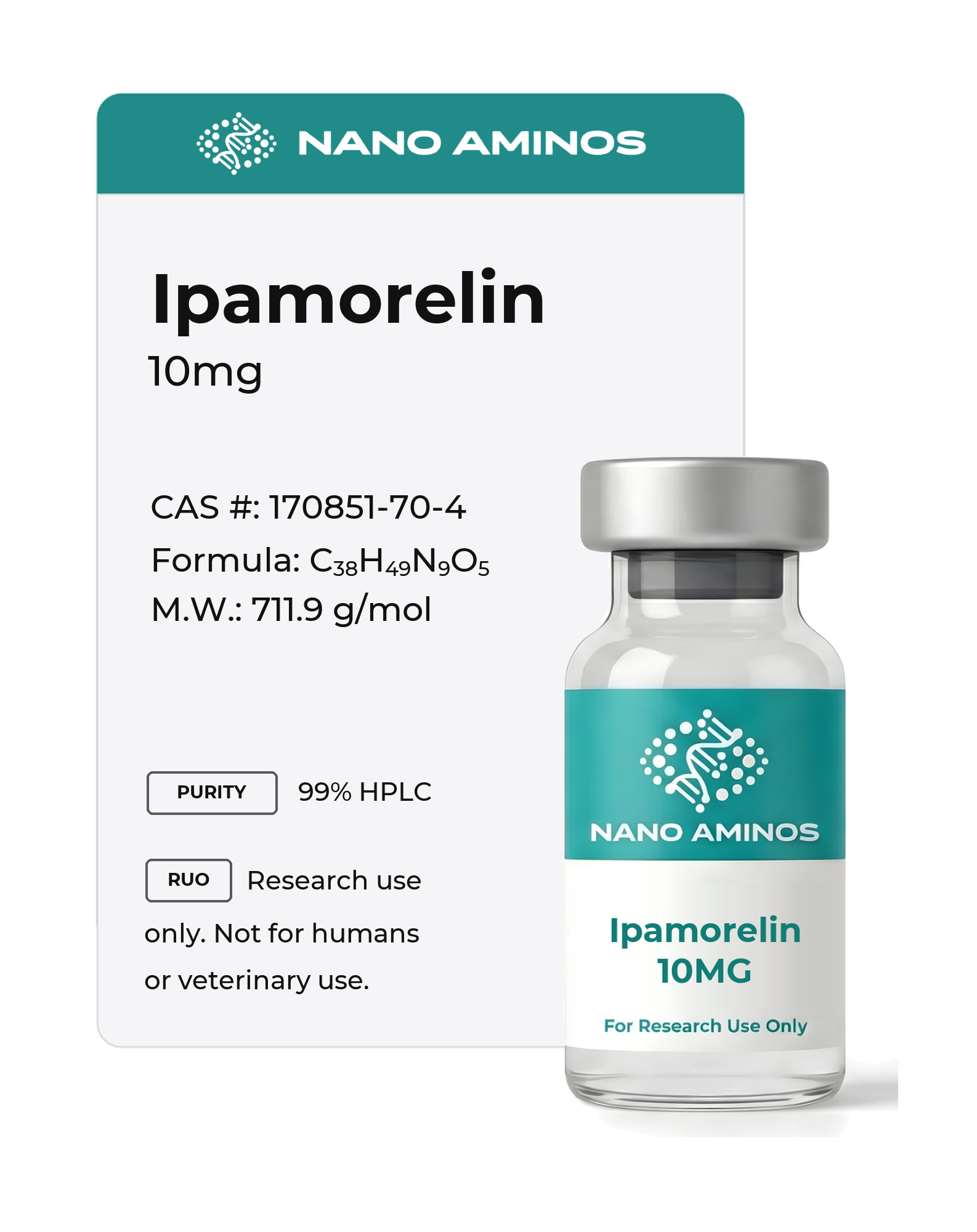
White solid. CAS 170851-70-4, MW 711.9. Reconstitute with bacteriostatic water. Purity 99.47% by RP-HPLC. Research use only — not for human or veterinary use.
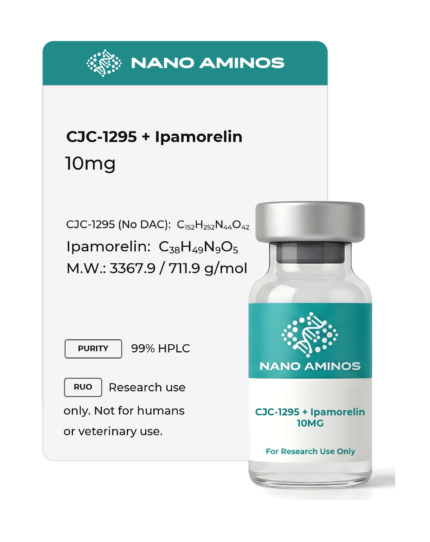
Ipamorelin is a selective GHRP supplied by Nano Aminos strictly as a reference material for in-vitro and laboratory research. It is catalogued under CAS 170851-70-4, molecular formula C38H49N9O5, and a molecular weight of 711.9 g/mol.
Provided as a lyophilized powder (white solid), Ipamorelin is part of the Nano Aminos GH Secretagogues research range and is prepared for research use by reconstitution in bacteriostatic water using standard aseptic technique.
Every production lot is characterized by reversed-phase HPLC and mass spectrometry at 99.47% typical HPLC purity and ships with a lot-specific Certificate of Analysis (COA), so identity and purity can be independently confirmed before use. Vials are kept cold and protected from repeated freeze–thaw cycles. Ipamorelin is available in 10 mg research size.
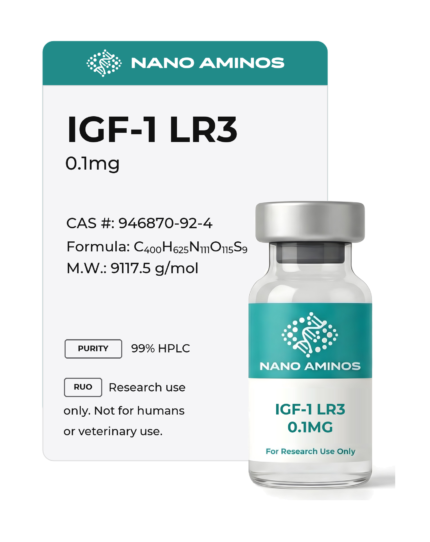
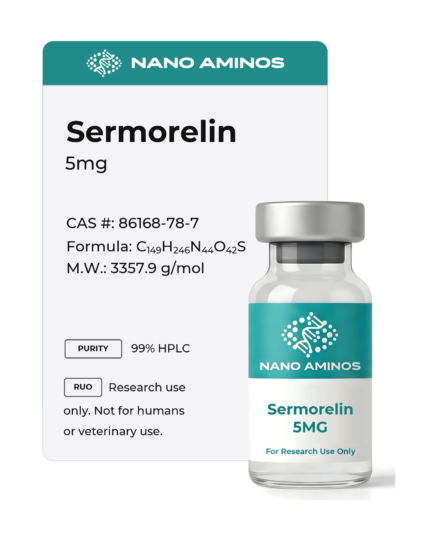
Related research: browse the full GH Secretagogues category or compare IGF-1 LR3 and Tesamorelin.
For research use only. Not for human or veterinary use. Ipamorelin is not a drug, food, or dietary supplement.
| Compound | Ipamorelin |
|---|---|
| Classification | Selective GHRP |
| CAS number | 170851-70-4 |
| Molecular formula | C38H49N9O5 |
| Molecular weight | 711.9 g/mol |
| Purity | 99.47% by RP-HPLC (area %) |
| Physical form | Lyophilized powder |
| Appearance | White solid |
| Reconstitution | Bacteriostatic water |
Each production lot is released against an analytical specification and ships with the corresponding Certificate of Analysis.
Ipamorelin 10 mg
Lot 708775879- Purity (HPLC-UV)
- 99.47%
- Identity (LC-MS)
- Confirmed
- Net content
- 11.42 mg/vial
- Appearance
- White to off-white lyophilised powder
- Method
- HPLC-UV with LC-MS confirmation
- Reported
- 23 Jul 2026
- Accession
- AD-5971-9020-5656
Opens on this page. Analysis by an independent laboratory. Research use only - not for human or veterinary use.
Storage. Store lyophilized material at -20°C protected from light and moisture for long-term stability. After reconstitution, keep at 2-8°C and use within the documented in-use window.
Handling. Allow sealed vials to equilibrate to room temperature before opening to limit condensation. Reconstitute with the listed diluent using standard aseptic laboratory technique. Avoid repeated freeze-thaw cycles.
Safety. Handle as a laboratory research chemical. Wear appropriate PPE and follow your institution's chemical-handling and waste-disposal procedures.
Dispatch. In-stock orders are processed on business days and shipped with temperature-controlled packaging and gel packs to preserve material integrity in transit.
Tracking. A tracking reference is issued at dispatch. Lab accounts can consolidate shipments and arrange standing orders.
Eligibility. Orders are accepted from researchers, resellers and institutions for laboratory research use only.
Literature referencing this compound.
Publications relevant to this molecule, provided for research reference. Inclusion does not imply an approved use or any claim about the products sold here.
Background reading on peptide chemistry and handling.
- Peptides explained Structure, nomenclature and how peptides differ from proteins
- Peptide bond chemistry How the amide backbone forms and what makes it stable
- How peptides are synthesised Solid-phase synthesis, cleavage and purification
- Storage and stability Lyophilised handling, reconstitution and freeze-thaw limits
- Research applications Where these compounds appear in the published literature
- Publication library Indexed citations with DOI links